
A recent Public Health report by Cambridgeshire County Council has concluded that current operations at Saxon Pit in Whittlesey do not pose any immediate risks to public health, while also recommending further monitoring and engagement to assess cumulative impacts.
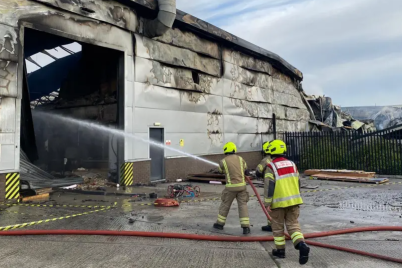
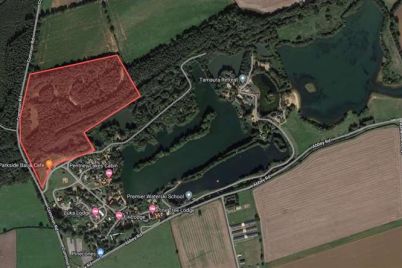
The assessment, commissioned in response to public concerns about activities at the industrial site off Peterborough Road, reviewed emissions and other potential health risks from the three businesses operating on or near the site: Johnsons Aggregate Recycling, which treats incinerator bottom ash; Forterra, a house brick manufacturer; and East Midlands Waste Management, which imports waste to stabilise the pit face and has permission to recycle metal.
All operations are regulated through Environment Agency permits, and the report confirmed that the site is generally operating in line with these requirements. The risk assessment considered potential risks from emissions to air, land, and water, and was compiled with input from the UK Health Security Agency (UKHSA), Environmental Health at Fenland District Council, the Animal Plant and Health Agency (APHA), and advice from the Environment Agency and the council’s Waste Planning Authority.
The report specifically found no public health risks associated with the use of water from King’s Dyke for livestock, emissions from land such as gas from the site, or air quality in the Hallcroft Road area, where monitoring data indicates good air quality. Nonetheless, the report identified areas requiring further evidence, including air quality at the Saxon Pit boundary, potential ongoing noise or odour issues, and cumulative health impacts, including those affecting mental health.
Sally Cartwright, Director of Public Health at Cambridgeshire County Council, said:
“We are pleased to have carried out this work with our partners, which brings together all the available relevant data on the potential health impacts of these operations in the community.
“The assessment shows that the regulatory arrangements for the site with multiple activities is complex, and that understanding the combined effects on health can be challenging.
“The cumulative impacts on health and wellbeing need to be better understood and assessed, and we’re proposing further work to address that.
“We’re also keen to gather further evidence and data and a plan is in place to do that. We recognise that recommending further analysis, particularly around air quality, may cause concern. Our intention is the opposite. We want to strengthen the evidence base to provide further reassurance.
“Positively, the most verified data we have on air quality in Whittlesey from Hallcroft Road shows it to be in compliance with national air quality objectives. It’s important to note that overall air quality is not just impacted by industrial activity, it is also affected by other local sources including transport and domestic open fires and solid fuel stoves.
“We’d like to involve the community as we move forward, with plans to hold quarterly regulator meetings with residents and to establish a new larger group, including community representatives, to oversee the delivery and implementation of the recommendations arising from this assessment.”
The report recommends that regulators hold quarterly meetings with residents to provide updates and foster collaboration between the community, operators, and regulators. Public Health will work with residents on a cumulative community health impact assessment, while the Environment Agency, supported by Fenland District Council, will increase monitoring to ensure water emissions remain safe. Multi-agency partners will also develop an air quality monitoring strategy and maintain regular review of dust emission management plans. Additionally, Public Health will explore ways to strengthen policies and practices relating to waste and human health.
An information event for the wider community is planned, with ongoing meetings to be scheduled in line with the report’s recommendations, ensuring continued engagement and transparency.