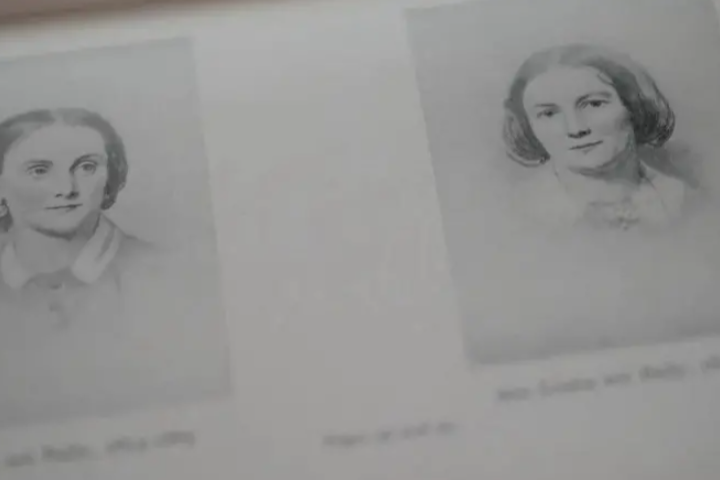
The rediscovery of a remarkable Victorian story has emerged during the restoration of the church’s mosaic, revealing the travels of two sisters whose efforts shaped part of the building’s character. The Baily sisters mosaic story centres on Emily and Anne-Louise Baily, who in 1861 collected marble, granite, porphyry and alabaster during a tour of Europe and the Middle East. These stones later formed the mosaic for the reredos at St Lawrence Church in Great Waldingfield, Suffolk.
Their journey was described by researcher Phil Judd as one “that very few men had even done, let alone for two women, in the sort of clothing they would have had, lack of transportations and the difficulties in getting from A to B”. The Baily sisters mosaic story highlights how unusual their travels were for the period. Their route included challenging terrain, such as the journey to Wadi Halfa on the Egypt and Sudan border, which Mr Judd characterised as remarkable at a time when “very few men had even been able to achieve that”.
The Judds researched the unmarried sisters, who worshipped at the church with their brother, Reverend Waldingfield. They found the sisters came from a wealthy background with relatives who were lawyers, baronets and surgeons. The Baily sisters mosaic story also includes their contributions to local welfare, as they ensured food was supplied in the local school for children, which Mr Judd noted “quite often didn’t happen”.
For some time, there was little information about their lives, but the recent discovery of a book in the US has offered more detail, which the researchers are “still in the process of reading”. Their year-long journey ended with the sisters returning to Suffolk carrying small fragments of stone. These were sent to Rome to be shaved into thin slices to decorate the church’s chancel.
Church warden Christopher Francis said: “The craftsmanship and the work that’s gone into it, it’s quite amazing.” He observed how “these different materials, these different stones, there’s not a grout line between them, they’re all intermeshed”. His comments emphasise the technical skill behind the mosaic and form a key part of the Baily sisters mosaic story.
It was confirmed the women brought back only tiny fragments “about one or two millimeters thick”, which Reverend Faith Marsden said reduced any chance they might be reclaimed by the country of origin. The mosaic began to deteriorate in 2001, but funding from the National Lottery Heritage Fund and the Suffolk Historic Churches Trust has enabled restoration work. Ms Marsden said: “A small Suffolk village that has an incredible story from around the world, not only is the reredos revived, so is its history.”
The restoration process has revealed both the physical fragility of the mosaic and the historical significance of its creation. The Baily sisters mosaic story underscores how a collection of small stones gathered during an ambitious journey became a lasting feature of a village church. Their efforts, rediscovered during conservation work, highlight a connection between Victorian travel and local heritage that continues to resonate.