A Dramatic Comeback in Ontario
The 2026 FIFA World Cup delivered another breathtaking encounter on Saturday evening as Germany staged a dramatic second-half comeback to defeat Ivory Coast 2-1. Staged at the magnificent, capacity-filled Toronto Stadium in Canada, the highly anticipated Group E fixture officially commenced at exactly 21:00 BST on 20 June 2026. For vast portions of the physical contest, Julian Nagelsmann’s side appeared entirely bereft of the devastating attacking fluidity that had characterised their opening-day thrashing of Curaçao. However, a sensational, game-changing cameo off the substitutes’ bench from striker Deniz Undav ultimately rescued the European heavyweights. The late, pulsating victory emphatically banishes the lingering demons of Germany’s recent World Cup struggles, mathematically guaranteeing their progression to the newly expanded Round of 32 with an entire group game to spare.
For the reigning African champions, the final whistle brought nothing but profound heartbreak. Having executed a near-flawless tactical blueprint for over an hour and taking a thoroughly deserved first-half lead, Emerse Faé’s men were left utterly devastated by the late onslaught. Despite the bitter, last-gasp defeat, the Elephants showcased immense footballing pedigree and remain firmly in contention to advance from the highly competitive group stage.
First Half: Elephants Disrupt the German Machine
Arriving in North America heavily burdened by the humiliating memories of consecutive group-stage exits in 2018 and 2022, Germany were incredibly eager to firmly re-establish their aura of absolute invincibility. Following a 7-1 demolition of Curaçao earlier in the week, they were widely expected to assert immediate dominance over their West African counterparts. However, Ivory Coast, buoyed by a gritty, hard-fought 1-0 victory against Ecuador in their own tournament opener, presented a significantly more complex, resilient challenge.
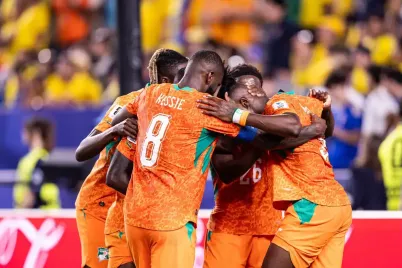
Operating in a highly disciplined 4-3-3 formation, the Ivorians fiercely contested the physical midfield battle from the very first blast of the referee’s whistle. The imposing trio of Ibrahim Sangaré, Christ Inao Oulaï, and Franck Kessié provided a robust, uncompromising shield for their backline, aggressively disrupting the passing rhythms of German playmakers Aleksandar Pavlović and Felix Nmecha. The tactical chess match resulted in a surprisingly even first half, with overall possession statistics perfectly split at 50% apiece by the half-time interval.
The African heavyweights were not merely content to sit deep in a low block and passively absorb pressure; they actively sought to ruthlessly punish the European side in rapid transitional phases. In the 30th minute, their calculated, vertical approach yielded a spectacular reward. Capitalising on a momentary lapse in concentration within the advancing German defensive structure, Kessié surged into the final third. Exhibiting exceptional composure under intense pressure, the veteran midfielder slotted a precise, clinical finish past legendary goalkeeper Manuel Neuer, sending the passionate Ivorian contingent inside the stadium into absolute delirium.
Trailing 1-0 and visibly frustrated by their inability to penetrate the defensive lines, Germany struggled to mount any meaningful offensive response before the half-time break. The dynamic attacking trio of Kai Havertz, Jamal Musiala, and Leroy Sané found themselves frequently isolated and expertly marshalled by the commanding central defensive partnership of Odilon Kossounou and Emmanuel Agbadou.
Nagelsmann’s Tactical Reshuffle
Recognising the urgent necessity for fresh attacking impetus and a drastic structural adjustment, Nagelsmann turned to his substitutes’ bench. The German manager made an initial defensive alteration at half-time, introducing Real Madrid stalwart Antonio Rüdiger in place of Nico Schlotterbeck. The change was explicitly designed to solidify the back three and inject greater aggressive, progressive ball-playing capability from deep defensive areas.
Despite the defensive switch, the early stages of the second half followed a remarkably similar, frustrating pattern for the Europeans. The Elephants remained highly organised, completely nullifying the German wide channels and forcing their technically gifted opponents into stagnant, lateral passing sequences that rarely threatened Yahia Fofana’s goal. The Ivorian goalkeeper was enjoying a stellar evening, repeatedly drawing the ire of the frustrated German supporters with his confident handling and clever time-management techniques.
As the clock ticked perilously toward the hour mark, Nagelsmann opted for a decisive, game-altering tactical gamble. In a bold, sweeping triple substitution in the 59th minute, the head coach withdrew Musiala, Sané, and Pavlović, introducing Jamie Leweling, Nadiem Amiri, and Deniz Undav into the fray. The introduction of Undav, in particular, completely transformed the overall complexion of the match. Operating as a direct, highly physical focal point, the forward immediately provided the German midfield with a reliable target, successfully stretching the previously comfortable Ivorian defensive line.
The Comeback Commences
The extensive tactical reshuffle required less than ten minutes to pay spectacular dividends. In the 68th minute, Germany finally managed to unpick the stubborn African lock. A swift, incisive passing sequence rapidly bypassed the Ivorian midfield engine room, eventually finding Undav in a dangerous pocket of space. The substitute required absolutely no second invitation, firing a clinical, instinctive strike past Fofana to rightfully restore parity. The crucial equaliser noticeably altered the psychological momentum of the contest, completely reinvigorating a German side that had previously looked desperately short on creative ideas.
Responding to the mounting, suffocating European pressure, Faé attempted to inject fresh legs and renewed energy into his exhausted squad. In the 74th minute, a triple substitution saw Evann Guessand, Simon Adingra, and Seko Fofana enter the pitch, replacing Ange-Yoan Bonny, Amad Diallo, and Sangaré. The alterations temporarily stemmed the relentless German tide, and the African champions even manufactured a glorious opportunity to miraculously reclaim the lead.
In the 88th minute, Nicolas Pépé, who had been introduced shortly before, embarked on a dangerous, weaving run down the right flank. He found an unmarked Adingra inside the penalty area, but the winger crucially hesitated. Instead of hitting the ball cleanly on the run, he attempted to take an extra touch, which ultimately allowed the rapidly retreating German defenders to successfully dispossess him before a shot could be unleashed, leaving the travelling Ivorian supporters holding their heads in despair.
Late Drama in Toronto
As the physically draining encounter moved deep into stoppage time, both proud nations appeared increasingly resigned to a hard-fought, highly tactical draw. However, the sheer depth and unwavering belief of the German squad ultimately proved entirely decisive in the dying, breathless moments of the match.
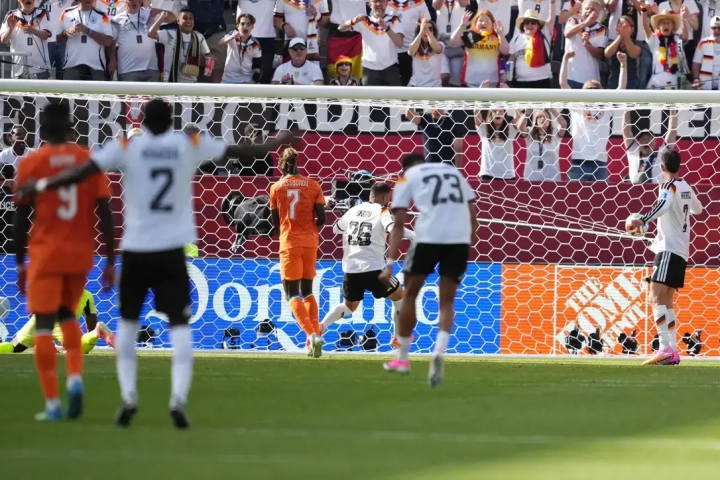
In the fourth minute of added time (90+4′), Germany orchestrated one final, devastating offensive thrust. Nmecha, operating with exceptional vision in the centre of the park, spotted the intelligent, darting movement of Undav. He threaded a beautifully weighted, precise pass to the frontman just outside the penalty area, slightly left of the centre. Displaying phenomenal spatial awareness and predatory instinct, Undav seamlessly received the ball, turned elegantly away from his scrambling marker, and unleashed a powerful, low drive. The emphatic strike flashed past the desperate dive of Fofana, nestling beautifully into the bottom corner of the net.
The breathtaking, last-gasp winner sparked chaotic, joyous scenes of celebration among the German players and coaching staff, entirely deflating the courageous Ivorian resistance. With mere seconds remaining on the referee’s watch, Die Mannschaft professionally managed the restart to successfully secure a monumental 2-1 victory.
Tournament Implications and the Road Ahead
When the final whistle finally echoed across the cavernous Toronto arena, the contrasting emotions were highly palpable. Deniz Undav was rightfully showered with immense praise, his sensational super-sub brace having single-handedly salvaged his nation’s World Cup ambitions on a fiercely difficult evening. Securing a maximum six points from their opening two fixtures mathematically ensures that Germany will confidently progress to the Round of 32. They have completely erased the suffocating pressure and national anxiety that had lingered prior to the tournament, and can now approach their final group-stage assignment with the luxurious, invaluable option of heavily rotating their squad.
Conversely, the heartbreaking nature of the late defeat will be incredibly difficult for Ivory Coast to immediately digest. Having effectively executed their pragmatic tactical game plan for the vast majority of the evening, they were ultimately undone by a fleeting moment of sheer individual brilliance. Remaining on three points in Group E, the Elephants’ tournament destiny remains firmly within their own hands. They face an absolutely critical final fixture, acutely aware that a professional, disciplined performance will likely be sufficient to secure their own passage into the knockout phases and firmly cement their status as genuine tournament dark horses.
Official Match Facts
Goalscorers:
- Ivory Coast: Franck Kessié (30′)
- Germany: Deniz Undav (68′, 90+4′)
Substitutions – Germany:
Minute | Player On | Player Off |
45′ | Antonio Rüdiger | Nico Schlotterbeck |
59′ | Jamie Leweling | Leroy Sané |
59′ | Deniz Undav | Jamal Musiala |
59′ | Nadiem Amiri | Aleksandar Pavlović |
84′ | Leon Goretzka | Kai Havertz |
Substitutions – Ivory Coast:
Minute | Player On | Player Off |
74′ | Evann Guessand | Ange-Yoan Bonny |
74′ | Simon Adingra | Amad Diallo |
74′ | Seko Fofana | Ibrahim Sangaré |
81′ | Guéla Doué | Wilfried Singo |
84′ | Nicolas Pépé | Yan Diomande |