There are rare moments in football that transcend the ordinary boundaries of the sport and bleed directly into mythology. Tuesday, 16 June 2026, will forever be etched into the annals of the FIFA World Cup as the day the game’s greatest marksmen staged a spectacular, hostile takeover. Across three separate time zones in the United States, three distinct generations of goalscoring royalty took to the pitch and delivered an unforgettable masterclass in attacking supremacy.
In Kansas City, the established maestro reached the ultimate summit. In New Jersey, the heir apparent accelerated his relentless chase. In Boston, the goalscoring cyborg finally announced his arrival.
Between Lionel Messi, Kylian Mbappé, and Erling Haaland, a staggering seven goals were plundered in a single 24-hour window, shattering long-standing records and rewriting the history books in real time. Here is an in-depth look at how Tuesday unfolded as the festival of football witnessed an unprecedented exhibition of striking greatness.
The Summit: Lionel Messi Equals the Ultimate Crown
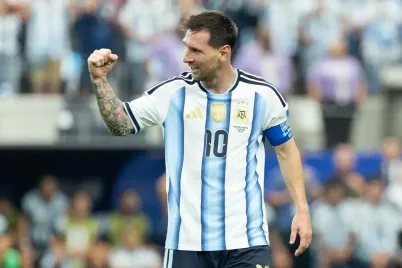
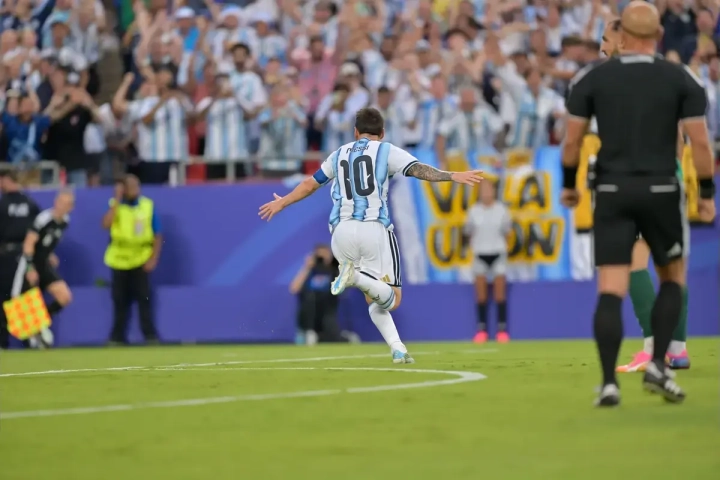
At nearly 39 years old, conventional wisdom suggested Lionel Messi’s role in this expanded 48-team tournament would be restricted to that of a deeper, orchestrating playmaker. Yet, against a heavily backed Algeria side at the Kansas City Stadium in Missouri, the Argentine captain proved his predatory instincts remain entirely unblunted.
In a commanding 3-0 victory to kick off La Albiceleste’s title defence, Messi single-handedly dismantled the Fennec Foxes, scoring his first-ever World Cup hat-trick. After curling in a trademark strike from the edge of the area in the 17th minute, he capitalised on a spilled save from Algerian goalkeeper Luca Zidane on the hour mark, before completing his treble in the 76th minute following a slick counter-attack involving Nico González.
The sheer poetry of the achievement cannot be overstated. Exactly two decades ago, to the very day, on 16 June 2006, a teenage Messi announced himself to the world by scoring his first World Cup goal against Serbia and Montenegro in Germany. Fast-forward exactly twenty years, and his 76th-minute strike marked his 16th World Cup goal, officially tying him with Germany’s Miroslav Klose as the tournament’s all-time leading goalscorer.
Leaving the pitch to a thunderous standing ovation, visibly emotional, Messi once again proved his enduring magic. Argentina manager Lionel Scaloni summed up the historic weight of the performance in his post-match press conference: “For 20 years, he’s had us used to seeing things like this, and he inspires everyone who watches him play.”
The Chase: Kylian Mbappé Cements French Immortality
While Messi was busy catching Klose in the Midwest, Kylian Mbappé was shattering domestic records and hunting down global ones on the East Coast.
France’s opening Group I fixture against African heavyweights Senegal at the New York New Jersey Stadium proved to be a fiercely contested physical battle, but the reigning runners-up eventually triumphed 3-1. Inevitably, it was their talismanic captain who provided the decisive blows when the game hung in the balance.
Mbappé struck twice in the second half (66′, 90+6′). His devastating pace in transition and ruthless finishing not only secured the three points but cemented a monumental personal milestone. His stoppage-time strike was his 58th international goal, seeing him finally surpass Olivier Giroud to become France’s undisputed all-time top goalscorer.
On the global stage, Mbappé’s brace moved his overall World Cup tally to 14 goals. At just 27 years of age, he has already equalled legendary German striker Gerd Müller. Only Brazil’s Ronaldo (15) and the newly tied duo of Klose and Messi (16) stand ahead of him. Given his terrifying trajectory and explosive prime, the question is no longer if Mbappé will break the all-time World Cup scoring record, but rather when he will shatter it completely.
The Arrival: Erling Haaland’s Long-Awaited Debut
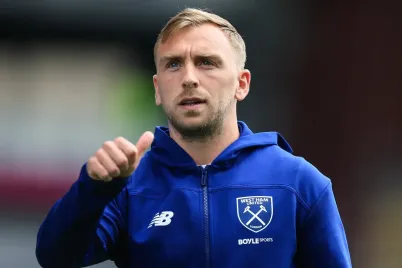
While Messi and Mbappé boast extensive, trophy-laden World Cup pedigrees, Erling Haaland arrived in North America with a point to prove. Despite terrorising domestic and European club defences for years at Manchester City, the towering striker had been starved of the ultimate international stage.
Norway’s 4-1 demolition of Iraq at the Boston Stadium marked the Scandinavian nation’s first World Cup appearance in 28 years. Led by the creative genius of Martin Ødegaard, their ‘golden generation’ wasted no time making up for lost decades. Leading the line with his characteristic physical dominance, Haaland required just 43 minutes to open his World Cup account, delivering a brutal first-half brace (29′, 43′).
Haaland’s forceful style of play, characterised by explosive, direct runs into the box and sheer aerial superiority, was simply too much for the Iraqi defence to handle. Though he currently sits 14 goals behind Messi and Klose’s towering benchmark, his freakish strike rate suggests he could rapidly climb the all-time leaderboard if Norway continues to progress deep into the knockout stages.
Tale of the Tape: A Historic 24 Hours
To fully appreciate the magnitude of Tuesday’s fixtures, here is how the three giants of the game altered the record books in a single round of matches.
Player | Nation | Match Result | Goals Scored | New WC Tally | Historic Milestone Achieved |
Lionel Messi | Argentina | 3-0 vs Algeria | 3 (17′, 60′, 76′) | 16 | Equalled Miroslav Klose’s all-time World Cup goalscoring record. |
Kylian Mbappé | France | 3-1 vs Senegal | 2 (66′, 90+6′) | 14 | Became France’s all-time top scorer (58 goals). Equalled Gerd Müller’s WC tally. |
Erling Haaland | Norway | 4-1 vs Iraq | 2 (29′, 43′) | 2 | Marked his highly anticipated World Cup debut with a dominant first-half brace. |
The Evolution of the Striker
Tuesday’s goalfest served as a fascinating comparative study in striking evolution. Fans across the globe were treated to a showcase of three entirely different paradigms of attacking perfection.
We witnessed the unparalleled spatial awareness, intelligence, and pinpoint precision of Messi, operating with the grace of a player who sees the game in slow motion. We saw the devastating transition speed and ruthless directness of Mbappé, capable of turning a defensive clearance into a goal within seconds. And finally, we experienced the pure, unadulterated physical domination of Haaland, bullying centre-backs and finishing with mechanical efficiency.
As the 2026 FIFA World Cup heads into its second round of group-stage fixtures, the overarching narrative is perfectly poised. Will Messi claim the record outright when Argentina face Austria in Dallas next Monday? How quickly will Mbappé close the tantalising two-goal gap? And just how many defences will Haaland bulldoze in his debut campaign?
The answers lie ahead, but one thing is already undeniably clear: 16 June 2026 will forever be remembered as the day the giants of the game took over the World Cup.