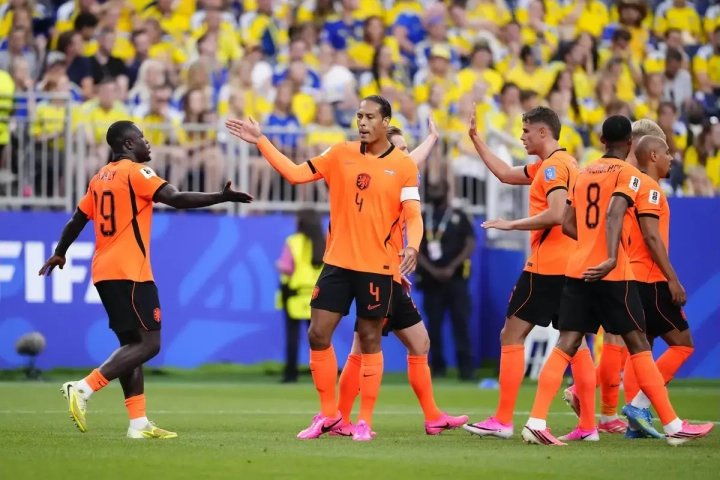
The Netherlands produced one of the most impressive displays of the World Cup so far as they overwhelmed Sweden 5-1 in a crucial Group F encounter, delivering a statement victory that significantly strengthened their hopes of progressing deep into the tournament. After being frustrated in their opening match against Japan, Ronald Koeman’s side responded in emphatic fashion, combining attacking quality, relentless pressing, and clinical finishing to dismantle a Swedish team that had entered the contest full of confidence following their convincing victory over Tunisia.
The result represented much more than three points. It was a demonstration of the Netherlands’ potential to challenge the strongest nations in the competition. From the opening whistle, the Dutch looked sharper, quicker, and more determined than their opponents. Sweden, who had impressed many observers with their attacking performance in their first group match, simply could not cope with the intensity and movement of the Oranje attack.
The game could hardly have started better for the Netherlands. Just five minutes into the contest, Brian Brobbey gave his side the lead after excellent work down the left flank. Cody Gakpo delivered a dangerous ball into the penalty area, and Brobbey reacted quickest, directing his finish beyond the goalkeeper. The early goal immediately shifted the momentum in favour of the Dutch and forced Sweden onto the back foot.
Rather than sitting back after taking the lead, the Netherlands continued to attack with purpose. Their midfield trio controlled possession and dictated the pace of the game, while the full-backs pushed forward whenever opportunities arose. Sweden struggled to settle, and the pressure eventually resulted in a second goal before the twenty-minute mark.
The move once again highlighted the attacking intent of Ronald Koeman’s side. Denzel Dumfries surged forward from the right and delivered a dangerous low cross into the six-yard box. Brobbey anticipated the delivery perfectly and managed to get the slightest touch on the ball, guiding it into the net for his second goal of the afternoon. The Dutch supporters inside the stadium erupted as their team established a commanding two-goal advantage.
At 2-0 down, Sweden faced a difficult challenge, but to their credit they gradually worked their way back into the game. Alexander Isak and Viktor Gyokeres began finding more space in advanced areas, and Sweden started creating moments of danger. Their best opportunity of the first half came when Isak launched a quick counterattack before finding Gyokeres, whose clever play created an opening for Yasin Ayari. However, the chance was wasted when Ayari failed to control the ball cleanly inside the penalty area.
The Scandinavian side thought they had found a route back into the contest shortly before half-time when Gustaf Lagerbielke headed the ball into the net. Celebrations were short-lived, though, as the effort was ruled out for offside. It was a significant moment because a goal before the break could have completely altered the mood heading into the second half.
Instead, Sweden entered the dressing room still trailing by two goals, and any hopes of a comeback suffered a major blow almost immediately after the restart. Less than three minutes into the second half, the Netherlands struck again. Dumfries was once more heavily involved, racing down the right wing before delivering a superb cross into the box. Gakpo timed his run perfectly and finished confidently to make it 3-0.
The goal effectively knocked the wind out of Sweden’s sails. Having spent the half-time interval discussing ways to get back into the match, they suddenly found themselves three goals behind against an opponent playing with increasing confidence.
The Netherlands sensed vulnerability and continued to attack. Their movement off the ball repeatedly pulled Swedish defenders out of position, creating spaces that were expertly exploited. Midway through the second half, Gakpo added his second goal of the afternoon and the Netherlands’ fourth. The move began after Sweden lost possession in an advanced position. Within seconds, the Dutch launched a swift counterattack. Crysencio Summerville found Gakpo on the edge of the area, and the Liverpool forward cut inside before firing a low shot past the goalkeeper at the near post.
At 4-0, the match appeared completely over. The Dutch players were playing with freedom and confidence, while Sweden looked shell-shocked. Yet Graham Potter’s side continued to fight and eventually found a consolation goal that briefly lifted their spirits.
The goal arrived through Anthony Elanga, who had been introduced from the bench. Sweden broke quickly through the middle, and Isak delivered a perfectly weighted pass into Elanga’s path. The winger remained composed and slotted his finish beyond Bart Verbruggen to reduce the deficit to 4-1. It was a reward for Sweden’s persistence and a reminder of the quality they possess in attacking areas.
For a short spell following the goal, Sweden enjoyed their best period of the match. Isak dropped deeper to influence play, while Elanga’s pace created additional problems for the Dutch defence. However, any hopes of a dramatic comeback were quickly extinguished by a disciplined Netherlands side that refused to lose concentration.
As the game entered its closing stages, the Oranje maintained control and continued to search for more goals. Their efforts were rewarded late on when substitute Crysencio Summerville added a fifth. The winger had already contributed with an assist and capped an excellent cameo appearance by finding the net himself. The goal completed a comprehensive 5-1 victory and underlined the gulf between the two teams on the day.
Much of the praise afterward centred on Brian Brobbey and Cody Gakpo, who each scored twice and constantly troubled Sweden’s back line. Brobbey’s physical presence, intelligent movement, and clinical finishing provided the platform for victory, while Gakpo demonstrated once again why he is considered one of the Netherlands’ most important attacking players. His combination of creativity and finishing quality proved decisive throughout the afternoon.
Equally influential was Frenkie de Jong. The midfielder controlled the rhythm of the match and ensured the Netherlands remained dominant in possession. Whenever Sweden attempted to build momentum, De Jong’s composure on the ball allowed the Dutch to regain control. His performance highlighted the importance of experience and leadership in major tournaments.
Denzel Dumfries also deserves significant recognition. The right-back contributed two assists and was a constant attacking outlet. His willingness to push forward stretched the Swedish defence and created numerous opportunities for his teammates.
For Sweden, the defeat represented a painful setback. Having entered the match following a convincing victory over Tunisia, expectations were understandably high. The attacking partnership of Isak and Gyokeres had generated considerable excitement, but neither player was able to make the same impact against a well-organised Dutch defence. Although Isak contributed an assist and showed flashes of quality, Sweden rarely looked capable of matching the Netherlands once they fell behind.
Defensively, Sweden endured a difficult afternoon. The back line struggled with the movement and pace of the Dutch forwards, while the midfield found it difficult to provide adequate protection. Conceding two early goals forced Sweden to chase the game, and that ultimately played into the hands of the Netherlands.
After the final whistle, Ronald Koeman expressed his satisfaction with both the result and the manner of the performance. The Dutch manager had spoken before the match about the need for improvement following the draw against Japan, particularly regarding game management and substitutions. He felt his players had responded exactly as required. Koeman praised the intensity shown from the opening minutes and highlighted the effectiveness of the team’s pressing strategy. He also noted that while scoring five goals naturally attracts attention, he was equally pleased with the collective discipline displayed throughout most of the contest.
Koeman emphasised that the victory should not lead to complacency. He reminded his players that qualification had not yet been secured and that there was still work to do in the final group match. However, he acknowledged that performances like this would increase confidence within the squad and reinforce belief that the Netherlands can compete with the strongest teams remaining in the tournament.
Sweden manager Graham Potter adopted a measured tone despite the heavy defeat. He admitted that his team had been second best from the opening stages and acknowledged that the early goals placed Sweden in an extremely difficult position. Potter pointed to defensive mistakes and a lack of intensity during crucial moments as key factors behind the result. Nevertheless, he also highlighted positive aspects, including the determination shown by his players to keep fighting despite the scoreline.
Potter stressed that one poor result should not define Sweden’s tournament and insisted his squad remained fully capable of reaching the knockout phase. He praised players such as Elanga and Isak for continuing to search for opportunities even when the game appeared lost. The manager expressed confidence that Sweden would learn valuable lessons from the defeat and respond positively in their next fixture.
The victory dramatically altered the complexion of Group F. The Netherlands moved into a strong position heading into the final round of group matches, while Sweden suddenly found themselves under pressure despite their excellent start to the competition. Goal difference also became an important factor, with the Dutch significantly improving theirs through the five-goal haul.
Beyond the standings, the performance sent a message to the rest of the tournament. The Netherlands had entered the World Cup with expectations but also lingering doubts following inconsistent displays in recent months. Against Sweden, they showcased the attacking quality, balance, and tactical organisation required to challenge for major honours.
Whether this victory proves to be the moment the Netherlands truly announce themselves as contenders remains to be seen. What is certain is that few teams have produced a more complete performance in the tournament so far. From Brobbey’s early double to Gakpo’s brilliance, from De Jong’s midfield control to Dumfries’ relentless attacking runs, everything seemed to click into place.
For Sweden, the challenge now is to regroup quickly and ensure that one difficult afternoon does not derail their campaign. For the Netherlands, meanwhile, confidence is soaring. Their emphatic 5-1 triumph over Sweden was not merely a victory; it was a statement of intent from a nation still dreaming of finally lifting football’s greatest prize.