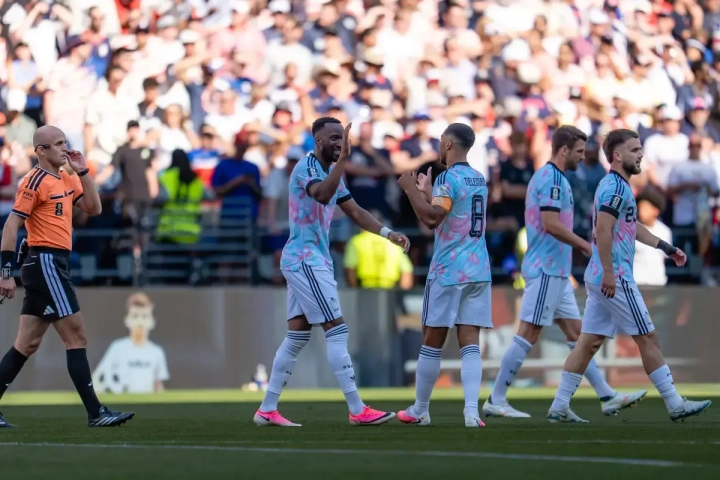
The United States’ World Cup journey ended in painful fashion in Seattle as Belgium delivered a composed, ruthless and ultimately emphatic 4-1 victory to move into the quarter-finals and leave the tournament co-hosts reflecting on a night when belief, momentum and home advantage were not enough.
For the USA, this was supposed to be the evening when years of preparation, a rising generation of players and the power of a home crowd came together in one defining knockout performance. Instead, it became a reminder of how unforgiving elite tournament football can be. Belgium were sharper in both penalty areas, calmer when the match became stretched and far more clinical when chances arrived. Charles De Ketelaere was the outstanding figure, scoring twice and repeatedly troubling an American defence that never truly looked settled. Malik Tillman briefly gave the hosts hope with a deflected free-kick equaliser, but Belgium responded almost immediately and never allowed the match to turn into the emotional surge the Seattle crowd had been desperate to inspire.
The tone was set early. The United States began with energy but little control, urged on by a loud and expectant crowd that sensed an opportunity for the team to reach another landmark moment on home soil. Belgium, however, looked ready for the occasion from the first whistle. Their passing was crisper, their movement more calculated and their forwards quicker to react whenever the ball broke loose around the American penalty area. Within the opening exchanges, Matt Freese was already being asked to stay alert, and the early warning signs were not heeded.
Belgium’s first goal came in the ninth minute and immediately punctured the atmosphere. The USA failed to clear their lines with enough conviction, allowing Belgium to recycle possession and attack the space that had opened up. Nicolas Raskin’s delivery across the face of goal exposed the hesitation in the American back line, and De Ketelaere arrived to finish from close range. It was not a spectacular goal, but it was a revealing one: Belgium were alive to the second phase, while the USA looked nervous and uncertain in the most dangerous part of the pitch.
The response from Mauricio Pochettino’s side was spirited rather than fluent. Christian Pulisic tried to take responsibility in possession, Tyler Adams and Weston McKennie attempted to lift the tempo in midfield, and Folarin Balogun worked across the front line looking for gaps between Belgium’s centre-backs. Yet the hosts struggled to sustain pressure. Belgium’s structure gave them protection through the middle, while their experience helped them slow the match whenever the crowd threatened to drag the USA forward.
Still, knockout matches can change on moments, and the United States found theirs just after the half-hour mark. Balogun won a free-kick in a promising area, giving the hosts a rare chance to set themselves and ask a question of Belgium’s defensive wall. Tillman’s strike took a deflection, wrong-footing the goalkeeper and finding the net to bring the score level at 1-1. For a brief spell, Seattle erupted. The noise returned, the American players ran back with urgency, and Belgium were suddenly facing the possibility that the emotional weight of the occasion might shift against them.
The problem for the USA was what happened next. At 1-1, the match demanded calm. It demanded a five-minute spell of concentration, clean possession and controlled defending. Instead, Belgium struck back almost at once. De Ketelaere again found space at the back post, timing his movement perfectly and punishing another lapse in American marking with a header that restored Belgium’s lead. It was a devastating blow, not only because of the scoreline but because of the timing. The USA had barely finished celebrating before they were behind again.
That second Belgian goal changed the match completely. Rather than chasing the emotional high of an equaliser, the USA went into the interval knowing they had wasted their best chance to tilt the contest. Belgium, by contrast, returned to the dressing room with confirmation that their plan was working. They had absorbed the one American surge, regained control quickly and exposed the defensive uncertainty that would continue to shape the second half.
Pochettino’s team did improve after the break. There was more urgency in their pressing, more direct running from wide areas and a greater willingness to commit bodies forward. The crowd responded, sensing that an early second-half goal could still change everything. Belgium, however, refused to panic. They defended the central spaces well, forced the USA into rushed decisions and waited for the moment when another American mistake would open the door.
That moment arrived in the 57th minute, and it effectively ended the contest. Freese, who had already been under pressure because of Belgium’s aggressive work without the ball, hesitated while in possession away from his goal. Belgium pounced. Hans Vanaken, introduced from the bench after Amadou Onana’s first-half injury, was alert enough to capitalise and finish into an exposed net. At 3-1, the sense of belief drained from the stadium. The USA had not been cut apart by an intricate passing move; they had handed Belgium the sort of opportunity that a team of that quality rarely wastes.
From there, the match became increasingly difficult for the hosts. Pochettino looked frustrated on the touchline as his players tried to force a way back, but their attacks became more desperate and less precise. Pulisic searched for pockets of space, McKennie attempted to drive the ball forward, and Balogun continued to occupy defenders, but Belgium’s back line held firm. Thibaut Courtois, when required, brought authority and calm. In front of him, Belgium’s defenders managed the closing stages with the sort of tournament maturity that the USA could not match.
Belgium’s fourth arrived in added time through Romelu Lukaku, who applied the final touch after another defensive error left the hosts exposed. It was a familiar name delivering the final punishment, and it underlined the difference between the two sides. Belgium had not needed to dominate every minute. They simply needed to recognise the key moments and take them. Lukaku’s goal sent many American supporters heading for the exits and confirmed a scoreline that felt brutal but not unfair.
For the United States, the defeat will sting because this tournament had carried such possibility. As co-hosts, they entered the World Cup with expectation, and their earlier performances had encouraged a belief that the programme had taken a genuine step forward. They had shown attacking quality, energy and personality before this tie. But against Belgium, they produced their most hesitant display at the worst possible time. The result also meant all three co-hosts were out by the end of the last-16 stage, adding another layer of disappointment to what had been billed as a landmark tournament for football across North America.
Pochettino did not try to hide from the reality afterwards. His assessment was blunt: the USA had not shown their real quality and had not connected with the game in the way they needed to. He accepted that Belgium had been better and made it clear that there could be no convenient excuse for the performance. In his view, the hosts had a bad day collectively and individually, and in a World Cup knockout match that is usually enough to send a team home. He was particularly frustrated by the way the USA conceded so quickly after Tillman’s equaliser, because that was the moment when the match briefly appeared ready to turn.
The American manager also dismissed the idea that the controversy surrounding Balogun’s availability had affected the team. Balogun had been cleared to play after the fallout from his red card in the previous round, but Pochettino insisted the surrounding noise was not the reason for the defeat. His focus was on football: loose defending, poor decision-making, missed opportunities to control the momentum and an inability to perform at the level the squad had shown earlier in the tournament. Despite the heavy loss, he spoke with pride about the foundations laid by the group and suggested there was still a future to build towards, even if decisions about his own role would come later.
Belgium manager Rudi Garcia, meanwhile, was keen to keep the attention on his side’s performance rather than the pre-match row. While some Belgian players admitted the controversy had given them extra motivation, Garcia emphasised the importance of the gameplan and the discipline with which his team carried it out. He also made a point of saying Balogun himself was not to blame for the situation, reflecting a desire to separate the player from the wider debate. For Garcia, this was a victory built on concentration, structure and execution.
That view was supported by Belgium’s performance. They were not flawless, and Onana’s injury was a concern that could carry consequences deeper into the tournament, but they looked like a team comfortable with knockout pressure. De Ketelaere’s movement caused problems throughout, Raskin provided intensity and intelligence in midfield, Tielemans offered leadership, and Lukaku’s late goal gave the scoreline a final flourish. Belgium now move on to face Spain in the quarter-finals, a meeting that will demand a different kind of performance but one they will approach with confidence.
For the USA, the post-mortem will be complex. There is clear progress in the squad, and the tournament still provided moments that showed the team’s ceiling has risen. Tillman’s goal, even in defeat, was another sign of his growing influence. The midfield has power and personality. Pulisic remains a player capable of carrying responsibility. Balogun, despite a difficult night, gives the attack a focal point. Yet this match also exposed the gap that remains between promise and genuine World Cup contention. Defensive concentration, composure under pressure and the ability to manage momentum after scoring are all areas that will be examined closely.
The most painful part for the American players may be that the match briefly gave them a way back in. At 1-1, with the crowd roaring and Belgium momentarily unsettled, there was a glimpse of the night they had imagined. But elite sides respond to danger quickly, and Belgium’s second goal was the moment that separated ambition from reality. From then on, the hosts were chasing not only the scoreline but their own composure.
In the end, Belgium left Seattle with a statement victory, while the United States left with regret. The 4-1 scoreline will look heavy in the record books, but it reflected the ruthless nature of a knockout tie in which Belgium handled decisive moments with far greater authority. The USA’s home World Cup dream is over, not because of one controversy or one isolated mistake, but because Belgium were better in the areas that mattered most. For Pochettino and his players, the challenge now is to turn the pain of this exit into something lasting. For Belgium, the road continues, and after a night of sharp finishing, strong mentality and controlled aggression, they will believe they are capable of going further still.