Colombia began their World Cup campaign with a confident 3-1 victory over Uzbekistan, but the final score only tells part of a night filled with emotion, pressure, history and important turning points. For Colombia, this was a professional opening performance built on experience, attacking quality and the ability to respond quickly when the match briefly threatened to turn against them. For Uzbekistan, it was a painful result but also a landmark occasion: their first appearance on football’s biggest stage and their first World Cup goal, a moment that will live long in the memory even after defeat.
The Group K meeting carried different meanings for both teams. Colombia arrived with expectation, a strong travelling support and a squad full of players used to big European and South American stages. Uzbekistan arrived as debutants, carrying the hopes of a nation appearing at the World Cup for the first time. Their challenge was not simply tactical; it was emotional. They had to manage the size of the occasion, the atmosphere, Colombia’s attacking threat and the reality that any mistake at this level can be punished.
Colombia started like a team that understood the value of an early group-stage win. They looked sharper in possession, quicker to second balls and more comfortable controlling the tempo. Luis Díaz was immediately central to their attacking plan, drifting into dangerous pockets, running at defenders and forcing Uzbekistan’s back line to stay narrow and alert. His movement created uncertainty, and even when Colombia did not carve Uzbekistan open completely, the pressure gradually began to build.
Uzbekistan’s approach was disciplined. Fabio Cannavaro’s side sat compact, tried to protect central areas and looked for chances to break through Eldor Shomurodov and Abbosbek Fayzullaev. They did not come out recklessly, which was understandable given the size of the match and the quality of Colombia’s forward players. Their first objective was survival: stay in the game, frustrate Colombia, avoid conceding early, and grow in confidence as the minutes passed.
For much of the first half, that plan worked. Colombia had more of the ball but found Uzbekistan difficult to break down. The debutants defended with numbers, closing passing lanes and forcing Colombia to recycle possession rather than attack directly through the middle. There were nervous moments, especially when Díaz struck the post and Colombia began to stretch the pitch, but Uzbekistan showed enough organisation to suggest they were not overwhelmed by the occasion.
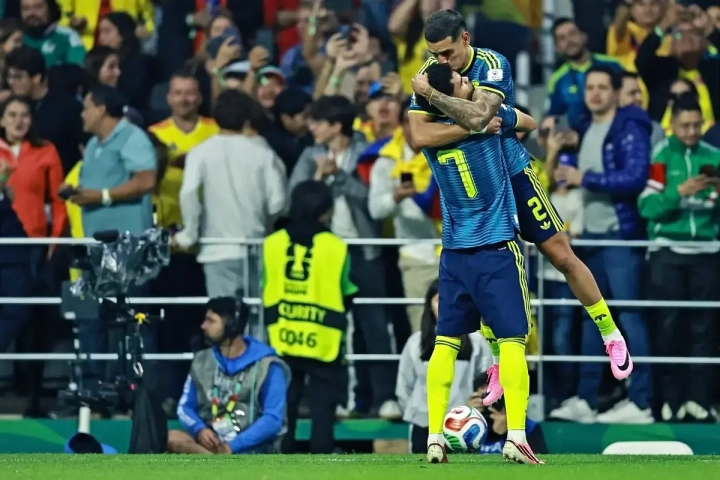
The match changed shortly before half-time. Colombia’s pressure finally brought a breakthrough when Daniel Muñoz scored with an excellent finish, arriving at the right moment and giving the South Americans the lead their first-half control had deserved. The goal was a major blow for Uzbekistan because they had worked so hard to reach the interval level. For Colombia, it was the reward for patience. They had not panicked, they had kept probing, and they found the moment of quality they needed.
Going behind forced Uzbekistan to make a decision. They could either remain cautious and risk allowing Colombia to control the second half, or they could push higher and take more risks. To their credit, they chose ambition. After the restart, Uzbekistan looked braver. Their midfield stepped up, their wide players became more adventurous, and Shomurodov began to see more useful service. The change gave the game a different rhythm and briefly put Colombia under pressure.
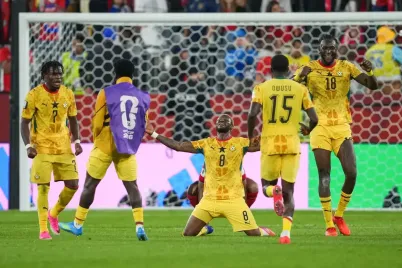
Uzbekistan’s historic moment arrived on the hour mark. After a dangerous attacking move involving Shomurodov, the ball fell for Abbosbek Fayzullaev, who finished to make it 1-1 and score Uzbekistan’s first-ever World Cup goal. It was more than an equaliser. It was a national milestone. The celebrations showed exactly what the moment meant: players sprinted together, supporters erupted, and Cannavaro’s bench reacted with pride and relief. For a few minutes, Uzbekistan had not only announced themselves on the world stage; they had shaken one of South America’s strongest sides.
That was the moment when the match could have changed completely. Colombia had been in control, but suddenly the pressure was on them. A draw would have been a frustrating start, especially after Portugal’s draw with DR Congo earlier in the group. Colombia needed a response, and they produced one almost immediately. Just five minutes after Uzbekistan’s equaliser, Díaz restored Colombia’s lead with the kind of decisive intervention that separates elite players from the rest.
Díaz’s goal was the defining moment of the match. His shot found a way past Utkir Yusupov, and although the goalkeeper will feel he could have done better, Colombia will see it as the result of sustained attacking danger. Díaz had been Colombia’s most threatening player throughout the game, and his reward came when his team needed him most. It was not just a goal; it was a statement of control. Uzbekistan’s joy lasted only briefly, and Colombia’s experience showed in the way they refused to let panic enter their game.
After going 2-1 down, Uzbekistan still refused to collapse. They continued to push forward, and one of their best late chances came when Bekhruz Karimov struck the bar, a moment that could have brought another twist. That near miss summed up Uzbekistan’s night: brave, competitive, dangerous in flashes, but not quite clinical enough at decisive moments. Against a team of Colombia’s quality, those small margins matter.
Colombia sealed the win deep into stoppage time through substitute Jaminton Campaz, whose late header made it 3-1 and removed any remaining doubt. It was a harsh finish for Uzbekistan, who had worked hard and created enough tension to make Colombia uncomfortable, but it also reflected Colombia’s greater depth. Lorenzo’s substitutions helped keep energy in the side, and Campaz’s goal showed how valuable bench impact can be in tournament football.
The result puts Colombia in a strong early position in Group K. With Portugal held by DR Congo, Colombia’s three points immediately give them control of the group. It does not guarantee anything, but it changes the pressure dynamic. Colombia can now approach the next game with confidence, knowing they have already banked a win. Uzbekistan, meanwhile, must recover quickly. Their performance showed promise, but their next matches now carry even greater importance.
Néstor Lorenzo’s post-match thoughts were shaped by satisfaction but also caution. He would have been pleased with Colombia’s mentality, especially the way his players responded after Uzbekistan equalised. Before the match, he had warned that there were no small teams at a World Cup, and the game proved his point. Uzbekistan were organised, emotional and dangerous when given space. Lorenzo’s message after the win was likely focused on respect for the opponent, happiness with the result, and the need for improvement in control and finishing. Colombia won well, but they also had periods where they allowed Uzbekistan belief.
Lorenzo will also take encouragement from Díaz’s influence. Big tournaments are often decided by players who can produce moments when matches become tense, and Díaz gave Colombia exactly that. His movement, directness and confidence gave Uzbekistan constant problems. Daniel Muñoz’s goal also showed Colombia’s threat from players arriving from deeper positions, while Campaz’s late contribution highlighted the strength of the squad beyond the starting eleven.
For Fabio Cannavaro, the emotions were more complicated. Defeat in a World Cup debut is disappointing, but there was also pride in the way Uzbekistan competed. Cannavaro had spoken before the tournament about wanting his players to enjoy the occasion, show courage and represent Uzbek football properly. They did that. They were not passive spectators in their own historic match. They defended with commitment, grew into the game and created a moment of national history through Fayzullaev’s goal.
Cannavaro’s frustration will come from the timing of Colombia’s second goal. After working so hard to equalise, Uzbekistan needed a calm five or ten minutes to settle the match and make Colombia doubt themselves. Instead, they conceded quickly, and that immediate response damaged their momentum. At this level, emotional control after scoring is as important as the goal itself. Cannavaro will know his team must learn from that moment if they are to stay alive in the group.
The match also showed the difference between tournament experience and tournament innocence. Colombia managed difficult spells better. When they were frustrated, they kept their structure. When they conceded, they reacted quickly. When Uzbekistan pushed late, Colombia found a way to kill the game. Uzbekistan, by contrast, had moments of excellent energy but also moments where they lacked calm under pressure. That is normal for a debutant side, but it is also the lesson they must absorb quickly.
Abbosbek Fayzullaev emerged as one of the major positives for Uzbekistan. His goal was historic, but his overall performance also showed why he is considered one of the country’s brightest talents. He played with courage, looked willing to receive the ball in tight spaces and gave Uzbekistan a creative outlet when they needed one. Shomurodov also gave Colombia problems with his movement and physical presence, particularly in the second half.
For Colombia, the spine of the team looked strong enough to handle the demands of the group. Camilo Vargas had key moments to deal with, the defence survived Uzbekistan’s better spell, and the midfield gave Colombia enough control to keep the match mostly on their terms. James Rodríguez’s presence also added intelligence and rhythm, even when the game became scrappy. Colombia were not perfect, but opening matches rarely are. What mattered most was finding a way to win.
The atmosphere added another layer to the occasion. Colombia’s supporters turned the stadium into a sea of yellow, giving their side the feeling of a home match despite the neutral venue. Uzbekistan’s fans had fewer numbers but equal emotion, celebrating every tackle, every attack and, most memorably, Fayzullaev’s goal. The contrast between Colombia’s established World Cup identity and Uzbekistan’s new arrival gave the match its emotional pull.
There was also a physical edge to the contest. Uzbekistan defended aggressively at times, and Colombia had to absorb challenges as they tried to move the ball quickly into wide areas. One dramatic first-half incident involving Abdukodir Khusanov near the touchline briefly brought concern when a camera operator was caught in the aftermath of a challenge. It was a reminder of how intense and uncontrolled World Cup matches can become, especially when players are operating under huge pressure.
In the end, Colombia deserved the win because they had more quality in the decisive areas. They created the better moments, responded to adversity and finished the game with authority. Uzbekistan deserved respect because they competed with pride and gave their supporters a goal to remember forever. The 3-1 scoreline may look comfortable on paper, but for long stretches this was a contest Colombia had to earn.
The biggest lesson for Colombia is that their attacking stars can carry them through difficult moments, but they will need greater control against stronger opposition. The biggest lesson for Uzbekistan is that they belong at this level, but belonging is not enough; they must sharpen their concentration after key moments and make their spells of pressure count.
Colombia leave the match with three points, confidence and early control of Group K. Uzbekistan leave with no points, but with proof that their World Cup debut was not merely symbolic. They scored, they fought, and they made Colombia work. For a first step onto the world stage, that matters. But in tournament football, pride must quickly turn into preparation. Colombia can look ahead with belief. Uzbekistan must look ahead with urgency.